
# The "Conflict Resolution Triangle" Tool
Keywords: Conflict Resolution Triangle tool, conflict triangle
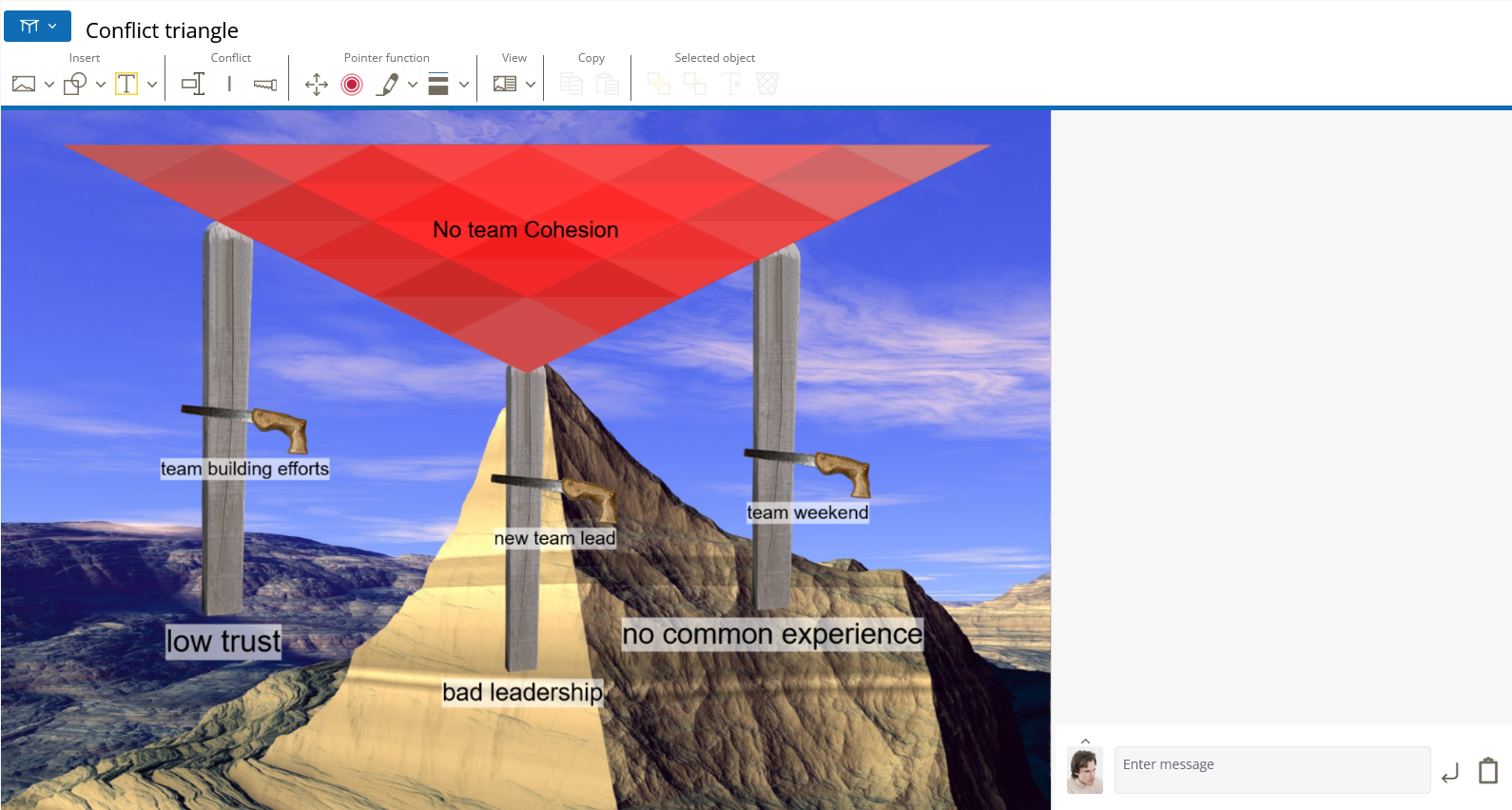
The Conflict Resolution Triangle is a powerful visual tool for understanding the dynamics of conflicts. It helps to identify the factors that "support" a conflict and to resolve them in a targeted manner.
# About the Tool
With this tool, you can collect the causes for the perpetuation of a conflict and develop specific solution options. Using structured solution brainstorming, the "supports" of a conflict are identified step by step and, metaphorically speaking, "sawn off."
The Metaphor of Instability
In this representation, the triangle stands on its head. In this position, it would fall over if it were not supported from the outside. This metaphor illustrates: Conflicts only continue to exist if they are actively maintained.
# Step-by-Step Instructions
# 1. label Naming the Conflict
First, define the core of the issue.
- Click the "Name of Conflict" button (the triangle with the input field).
- Give the conflict a name.
- Recommendation: The name can be catchy, funny, or ironic – similar to the headline of a sensationalist newspaper article. This promotes the necessary distance from the problem.
# 2. align_flex_end Identifying the Supports
Now examine what stabilizes the conflict in its current form.
- Look for the factors ("supports") that feed or maintain the conflict.
- Arrange these supports around the triangle.
- Visual Weighting: You can symbolize the effectiveness or intensity of the respective support via the size of the elements.
# 3. Structuring and Clustering
If a large number of factors are identified, a thematic order is recommended:
- Group related supports into appropriate thematic fields (clusters) to reduce complexity.
# 4. carpenter Solution Brainstorming
In the next step, you develop ways for change – the "sawing off" of the supports.
- Develop ideas on how individual supports can be specifically resolved or "sawn off."
- Focus on concrete behavioral changes or new framework conditions.
# Action Planning
An analysis process is only successful through subsequent implementation. Clarify the following points at the end:
- Which of the developed solution ideas can be implemented most promptly?
- Who takes responsibility for which steps by when?
Integration into the Workflow
Following this work, use the "Task List" tool to bindingly plan and document the concrete measures for implementing your solution ideas.
# Further Information
Related Topics
All graphical tools share the same basic operation (drawing, moving, deleting). You can find details here: General Functions of Graphical Tools